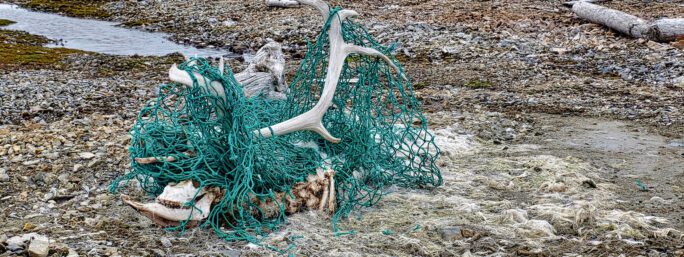
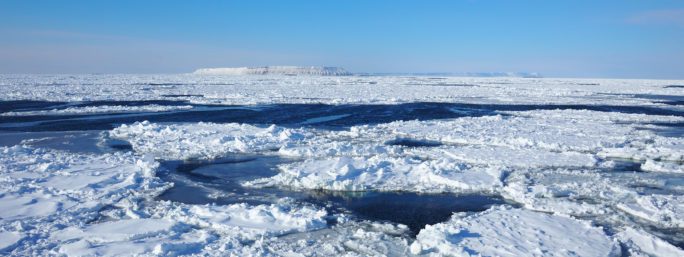
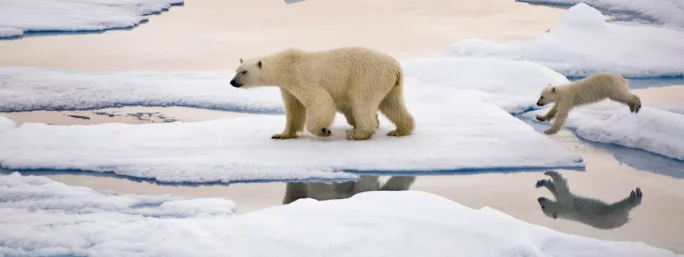
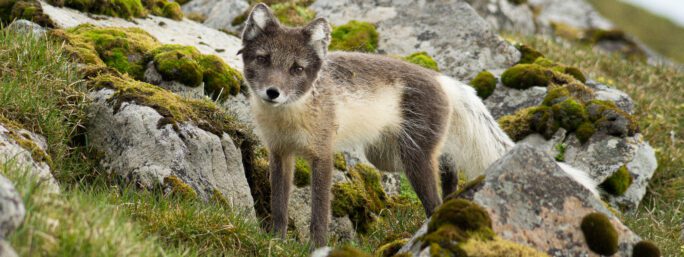
Frontpage MOSJ is a governmental system that monitors the environment on Svalbard and Jan Mayen Climate Atmosphere (3) Land (3) Ocean (5) Influence Fishery and freshwater fishing (1) Hunting and trapping (5) Pollution (14) Traffic (5) Fauna Marine fauna (18) Terrestrial fauna (3) Flora Landbased flora (1) Newly updated indicators Influence Pollution Beach litter in Svalbard Large quantities of litter are entering our oceans, and litter is all too apparent on beaches, in the water and on the seabed. Severe injuries and suffering can be inflicted on animals when… Fauna Terrestrial fauna Svalbard rock ptarmigan The Svalbard rock ptarmigan (Lagopus muta hyperborea) is a subspecies of rock ptarmigan and is the only resident herbivorous bird species in Svalbard. It is endemic to Svalbard in Norway… Fauna Terrestrial fauna Svalbard reindeer The Svalbard reindeer (Rangifer tarandus platyrhynchus) is only found in Svalbard, and the management of this species is therefore an all-Norwegian responsibility. It is monitored because it is an… Climate Ocean Sea ice extent in the Barents Sea and Fram Strait It is important to monitor the extent of sea ice because it is vital for the climate in the Arctic and globally, and because it sets important limits for the ecosystems in the Arctic. The sea ice extent in… Fauna Marine fauna Polar bear The polar bear (Ursus maritimus) in the Barents Sea lives on disappearing sea ice. Climate warming is the main threat to polar bears. The polar bear habitat is changing rapidly, and… Fauna Terrestrial fauna Arctic fox The Arctic fox (Vulpes lagopus) is indigenous to the Arctic tundra and an apex predator and scavenger in Svalbard. It is functionally important because it affects prey species on land, through ground…